
What's the Difference Between SCR and IGBT?


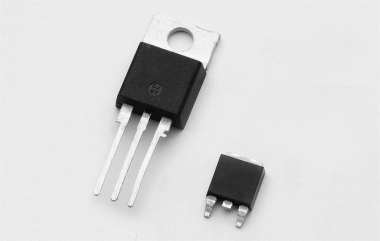
In the field of power electronics, both SCRs (Silicon Controlled Rectifiers) and IGBTs (Insulated Gate Bipolar Transistors) are essential power semiconductor devices, playing a crucial role in energy conversion and control. They can be found in everyday household appliances as well as large industrial machinery. However, these two types of devices differ fundamentally in terms of structure, operating principle, and performance characteristics, making them suitable for different applications. This article will explore the differences between SCRs and IGBTs in terms of structure, working principle, performance features, and applications.
Catalog
IV. Operating Principle Differences
I. What is an SCR?
An SCR, or Silicon Controlled Rectifier, is internationally recognized as a thyristor. It is a four-layer, three-terminal power semiconductor device composed of P-N-P-N layers, forming three PN junctions. Developed in the 1950s, the SCR marked a significant transition of semiconductor technology from low-power applications to high-power systems, revolutionizing industrial control and power conversion. SCRs are capable of rectifying alternating current and can also function as electronic switches, allowing precise control of circuit conduction and shutdown through control signals.
II. What is an IGBT?
IGBT, which stands for Insulated Gate Bipolar Transistor, is a three-terminal power semiconductor device that combines a MOSFET and a bipolar transistor (BJT). Introduced in the 1980s, it integrates the high input impedance of a MOSFET with the low conduction voltage drop of a BJT. The IGBT fills the gap between MOSFETs and traditional power transistors, and it has become a core component in medium- to high-power electronic devices. It is widely used in inverters, motor drives, and uninterruptible power supplies (UPS).
III. Structural Differences
The SCR features a classic P-N-P-N four-layer, three-terminal structure. The anode is connected to the outermost P-type layer, the cathode is connected to the outermost N-type layer, and the gate is connected to the middle P-type layer. This four-layer structure forms three series PN junctions, which can be electrically equivalent to a PNP transistor and an NPN transistor forming a positive feedback circuit. This relatively simple structure gives SCRs high reliability and a strong power-handling capability.
The IGBT has a more complex structure. It is fundamentally a three-terminal device with a gate, collector, and emitter. Internally, it can be viewed as a PNP transistor with a thick base driven by a MOSFET. Its input is MOSFET-based, while the output is bipolar transistor-based. This hybrid design allows the IGBT to retain the voltage-controlled advantages of a MOSFET while benefiting from the low conduction losses of a BJT.
IV. Operating Principle Differences
SCRs generally operate between conduction and cutoff states and rely primarily on current pulses at the control terminal for switching. When a trigger pulse is applied to the gate, the SCR switches from the off state to the on state. Once the current through the control terminal drops below the holding current, the SCR automatically returns to the off state.
The IGBT's operation combines the MOSFET and BJT mechanisms. When a positive voltage is applied to the gate, a conductive channel forms in the MOSFET, allowing current to flow between the collector and emitter. The BJT enhances the MOSFET's conduction capability, increasing the overall device's power-handling capacity.
V. Performance Differences
1. Frequency Characteristics
SCRs have relatively low-frequency characteristics, typically operating below 20 kHz. IGBTs, on the other hand, can operate at several hundred kHz or higher. Because of their high-frequency performance, IGBTs are suitable for high-frequency power electronics applications such as inverters and AC motor drives.
2. Switching Speed
SCRs have slower switching speeds, usually ranging from a few microseconds to tens of microseconds. IGBTs switch much faster, generally from tens of nanoseconds to a few microseconds. This makes IGBTs ideal for applications requiring high conversion efficiency and rapid response.
3. Conduction Voltage Drop
SCRs typically have a higher conduction voltage drop, usually above 1 V, while IGBTs have a lower conduction voltage drop, usually below 1 V. The lower conduction drop in IGBTs enables higher conversion efficiency and lower power loss.
VI. Application Differences
SCRs are primarily used in AC power control, lighting dimmers, temperature control, and AC motor control. Because of their higher conduction drop and slower switching speed, they are suitable for low-frequency, high-power applications.
IGBTs are mainly used in inverters, AC motor drives, and power modulators. Their low conduction drop and fast switching make them ideal for high-frequency applications that require high conversion efficiency.
VII. Conclusion
SCRs and IGBTs are both indispensable power semiconductor devices in power electronics, each with distinct features and application areas. SCRs, being semi-controlled devices, are simple in structure, cost-effective, and capable of handling large currents, making them important in traditional high-power rectification and static switching applications. IGBTs, as fully controlled devices, combine voltage-controlled operation with low conduction loss, fast switching speed, and flexible control, playing a critical role in medium- and high-frequency power electronic equipment.
Choosing between an SCR and an IGBT ultimately depends on the application. If high-frequency switching, low power loss, and precise control are needed, an IGBT is the better choice. If the application requires handling high voltage and current while being cost-sensitive, an SCR may be more appropriate. With ongoing technological advancements, both devices continue to evolve, complementing each other and driving innovation in power electronics.


