
LDR vs Photodiode: What's the Difference?


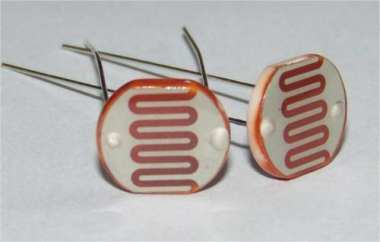
As key sensors in modern electronics, photosensitive components are widely used in light-controlled switches, automatic lighting, security alarms, communication devices, and many other fields. Among the many types of photosensitive components, light-dependent resistors (LDRs) and photodiodes are the most basic and common. Although both can convert light signals into electrical signals, they differ significantly in working principle, structural design, performance characteristics, and application scenarios. This article introduces the definition, working principle, structure, and performance characteristics of each device and compares their differences across multiple dimensions.
Catalog
I. Light-Dependent Resistor (LDR)
I. Light-Dependent Resistor (LDR)
1. What is a Light-Dependent Resistor?
A light-dependent resistor, also known as a photoresistor, is a special resistor made using the photoconductive effect of semiconductors. Essentially, it is a non-polarized resistor whose resistance changes significantly with incident light intensity: resistance decreases as light intensity increases and rises as light decreases.
2. Working Principle
LDRs rely on the photoconductivity of the material. When photons hit the semiconductor material (commonly cadmium sulfide CdS, cadmium selenide, or other photosensitive materials) with sufficient energy, electrons in the valence band are excited to the conduction band, creating free electrons and holes — in other words, generating additional charge carriers. As the number of carriers increases, the material becomes more conductive, causing the resistance to drop. Conversely, in the dark, the carrier density is low, resulting in high resistance.
3. Structural Features
The structure of an LDR is relatively simple. Typically, a thin film of cadmium sulfide or cadmium selenide is deposited on an insulating ceramic substrate. To increase the photosensitive area and reduce the distance between electrodes, the electrodes are often designed in an interdigitated comb-like structure. The whole component is usually encapsulated in a transparent resin for protection.
4. Performance Characteristics
· Sensitivity: LDRs are highly sensitive to changes in light intensity and can detect even slight variations.
· Response Speed: The response speed is relatively slow, making them unsuitable for rapidly changing light conditions.
· Spectral Response: Different types of LDRs respond differently to various wavelengths, allowing selection of materials based on specific needs.
· Stability: The resistance of LDRs is easily affected by temperature, so temperature compensation may be required.
II. Photodiode
1. What is a Photodiode?
A photodiode is a semiconductor light sensor used to convert light signals into electrical signals — when exposed to light, it generates a current or voltage output proportional to light intensity. It is commonly used as a light detector.
2. Working Principle
A photodiode contains a P–N junction (or PIN junction). When photons with sufficient energy strike the junction, electron–hole pairs are generated in the semiconductor — a typical photoelectric effect (photovoltaic or photoconductive effect). If the junction is reverse-biased, the photogenerated carriers are rapidly separated by the internal electric field (depletion region field) or reverse bias, forming a photocurrent that flows into the external circuit.
3. Structural Features
To improve photoelectric conversion efficiency, photodiodes are specially optimized. The photosensitive area of the PN junction is made larger, and the junction is shallow to ensure photons are absorbed near the depletion region. In addition to basic PN-type photodiodes, there are higher-performance PIN photodiodes, which insert an intrinsic semiconductor layer between the P and N regions to reduce junction capacitance, significantly improving response speed. Avalanche photodiodes (APDs) exploit avalanche multiplication to amplify weak light signals internally, making them ideal for detecting extremely faint light.
4. Performance Characteristics
· Sensitivity: Photodiodes are highly sensitive and can detect individual photons.
· Response Speed: They respond very quickly, making them suitable for rapidly changing light conditions.
· Spectral Response: The spectral response depends on the semiconductor material’s bandgap.
· Stability: Photodiodes are relatively stable and less affected by temperature.
III. LDR vs. Photodiode
1. Working Principle
This is the fundamental difference. LDRs are based on the photoconductivity of bulk semiconductor material, where light changes the material’s overall conductivity (resistance). Photodiodes rely on the photovoltaic effect of a PN junction, where light generates a photovoltage in the junction and produces a current in an external circuit. One is a resistive change; the other generates current.
2. Structure
LDRs are non-polarized two-terminal devices with simple structures. In circuits, they are usually connected in series with a fixed resistor to form a voltage divider, and light changes are detected by measuring voltage across it. Photodiodes are polarized devices that must be connected correctly and usually require reverse bias to establish a depletion field, ensuring linear, high-speed operation.
3. Sensitivity
LDRs are very sensitive to absolute light intensity, with a high dark-to-light resistance ratio, but their response is slow and inertial. Photodiodes may not match some highly sensitive LDRs in absolute sensitivity but respond extremely fast, detecting microsecond or even nanosecond light pulses, and are better at detecting weak light signals, especially APDs.
4. Response Speed
LDR response times are in the millisecond to second range, suitable only for slowly changing light, such as indoor light gradually dimming for streetlight control. Photodiodes respond in nanoseconds to microseconds, suitable for high-speed applications like fiber-optic communication, laser ranging, and high-speed barcode scanning.
5. Spectral Response
Both can be tuned through material selection, but photodiodes (especially silicon-based) generally have a broader and flatter response range.
6. Stability
Photodiodes are less affected by temperature, with minimal long-term drift. LDR resistance varies with temperature, and dark resistance drift is more pronounced.
IV. Conclusion
In short, LDRs and photodiodes cater to different design requirements. One is not inherently better than the other; each has its unique applications.
If you need a cost-sensitive system that doesn't require rapid response and only needs to detect light or compare intensity roughly, an LDR is ideal. Examples include automatic streetlights, traditional camera auto-exposure, and sunlight-following toys. Its advantages lie in simplicity, low cost, and strong driving capability.
If you need a system requiring high speed, high precision, stability, and quantitative light measurement or high-frequency light signal processing, you must choose a photodiode or its derivatives. Examples include fiber-optic network receivers, the core sensor in an optical mouse, LiDAR, and precision scientific instruments. Its value lies in superior performance, rapid response, and good linearity.


