
How Does IGBT Achieve Low Electromagnetic Interference Performance?


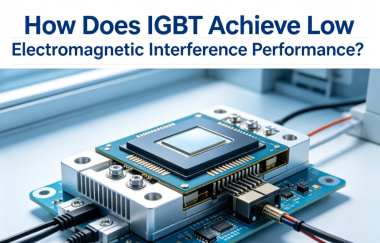
In the electronic components industry, IGBT (Insulated Gate Bipolar Transistor) is an important power semiconductor device widely used in high-voltage and high-current switching applications. In addition to its advantages such as low conduction loss, high voltage withstand capability, and high power conversion efficiency, the excellent low electromagnetic interference (EMI) characteristics of IGBT have also become a key factor for its stable operation in complex electronic systems.
Catalog
III. Low Electromagnetic Interference Characteristics of IGBT
I. What is an IGBT?
IGBT is a compound power semiconductor device that combines the high input impedance characteristics of MOSFETs with the low conduction loss advantages of bipolar transistors. It typically consists of an IGBT chip, gate driver circuit, and packaging structure, and is mainly used to control switching operations during power conversion processes.
Compared with traditional power transistors, IGBTs can maintain lower power losses under high-voltage and high-current conditions while offering relatively fast switching speeds. Therefore, they are widely used in applications such as electric vehicle motor controllers, inverters, photovoltaic inverters, wind power generation systems, industrial power supplies, and railway transportation systems.
II. Working Principle of IGBT
The operation of an IGBT is mainly controlled by the gate voltage, which regulates the internal current path. When a positive voltage is applied to the gate, a conductive channel is formed inside the IGBT, allowing current to flow between the collector and emitter to achieve power transmission. When the gate voltage decreases or disappears, the conductive channel is turned off, and the device enters the blocking state, preventing current flow.
In practical applications, IGBTs usually work together with driver circuits to achieve high-speed switching through the control of gate signals. Since IGBTs can reduce voltage losses in the conduction state and withstand high voltages in the off state, they can effectively improve the energy conversion efficiency of the entire power system.
III. Low Electromagnetic Interference Characteristics of IGBT
During high-frequency switching operations, power semiconductor devices may generate voltage and current variations, which can result in electromagnetic interference. Excessive electromagnetic interference may affect the normal operation of nearby electronic devices and reduce system stability. Therefore, reducing electromagnetic interference generated during IGBT operation is an important design consideration for improving electronic system reliability.
The low electromagnetic interference characteristics of IGBT are mainly reflected in the following aspects:
First, IGBTs adopt optimized chip structures and packaging designs to effectively reduce voltage and current oscillations caused by parasitic parameters. By minimizing parasitic inductance and optimizing current paths inside the device, IGBTs can reduce electromagnetic noise generated during switching transitions, thereby lowering electromagnetic radiation.
Second, the design of the IGBT driver circuit plays an important role in controlling electromagnetic interference. Appropriate gate drive resistance, soft-switching control technology, and low-noise driving solutions can reduce voltage spikes and current surges during IGBT switching, thereby decreasing high-frequency electromagnetic interference.
In addition, the low switching losses and high power conversion efficiency of IGBTs also help reduce heat generation and electromagnetic noise during system operation. By optimizing switching speed, IGBTs can achieve a balance between efficiency and electromagnetic compatibility, further improving overall system performance.
Meanwhile, modern IGBT products usually undergo strict electromagnetic compatibility (EMC) testing, including conducted interference tests and radiated interference tests, to ensure that the devices meet relevant standards in different application environments. Through testing and verification, IGBTs can maintain stable operation under high-power and high-frequency working conditions.
IV. Conclusion
With high voltage resistance, low power loss, high efficiency, and excellent low electromagnetic interference characteristics, IGBTs have become core components in modern power electronic systems. Through optimized chip structures, improved packaging designs, enhanced driver solutions, and strict electromagnetic compatibility testing, IGBTs can effectively reduce electromagnetic interference during operation and improve the stability and safety of electronic equipment. With the continuous development of electric vehicles, smart grids, and renewable energy technologies, IGBTs with superior EMI performance will play an increasingly important role in the future power electronics industry.


