
How to Identify Abnormal Transformer Temperature Changes?


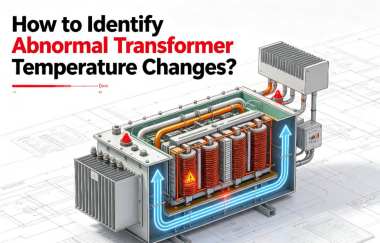
A transformer is an important device used for voltage conversion and power transmission in power systems. It is widely applied in industrial, energy, communication, and electronic equipment power supply fields. During operation, the windings and iron core inside the transformer generate losses due to current flow, which are converted into heat. Therefore, temperature changes are an important indicator for evaluating the operating condition of a transformer. Proper monitoring and evaluation of transformer temperature can help detect equipment abnormalities in time and prevent performance degradation or unexpected shutdowns caused by overheating.
Catalog
I. What Is Transformer Temperature Variation?
II. Methods for Measuring Transformer Temperature
III. Causes of Transformer Temperature Variation
IV. How to Determine Whether Transformer Temperature Is Abnormal?
V. Effects of Temperature Changes on Transformers
I. What Is Transformer Temperature Variation?
Transformer temperature variation refers to the phenomenon that the temperature of a transformer rises or decreases during operation due to changes in load, current, environmental conditions, and internal operating status. Under normal circumstances, a transformer will experience a certain temperature rise during operation. As long as the temperature remains within the designed operating range, the condition is considered normal.
Transformer temperature mainly includes oil temperature, winding temperature, and enclosure surface temperature. Among them, winding temperature has the greatest impact on transformer service life because long-term exposure of windings to high temperatures accelerates the aging of insulation materials. Therefore, accurately monitoring temperature changes is an important measure to ensure the safe operation of transformers.
II. Methods for Measuring Transformer Temperature
Currently, transformer temperature detection mainly uses temperature gauges, thermistors, infrared thermometers, and thermal imaging technologies.
Transformer temperature gauges are the most common measurement method. They are usually installed on the top or side of the oil tank to monitor transformer oil temperature in real time. When the temperature exceeds a preset limit, the temperature gauge can trigger an alarm signal to notify operators for inspection.
A thermistor is an electronic component whose resistance changes with temperature. It is usually installed near the transformer windings. By detecting changes in the resistance value of the thermistor, the winding temperature can be calculated to evaluate the internal temperature rise of the transformer.
An infrared thermometer measures temperature by detecting infrared radiation emitted from the transformer surface, enabling non-contact temperature measurement. Since the transformer enclosure usually cannot be directly touched, infrared temperature measurement can quickly identify abnormal high-temperature areas on the equipment surface.
A thermal imaging camera can scan the overall temperature distribution of a transformer and generate thermal images. By analyzing thermal imaging results, technicians can identify cooling problems, localized overheating, and heating issues in connection components, improving fault detection efficiency.
III. Causes of Transformer Temperature Variation
Transformer temperature changes are mainly affected by factors such as load variations, ambient temperature, insulation conditions, and cooling system performance.
First, load changes are one of the major factors affecting transformer temperature. When power demand increases, the current carried by the transformer rises, causing greater losses in the windings and iron core, which results in higher temperatures. When the load decreases, less heat is generated, and the transformer temperature will gradually decrease.
Second, ambient temperature affects the heat dissipation capability of a transformer. In a high-temperature environment, the temperature difference between the transformer and surrounding air becomes smaller, reducing heat dissipation efficiency and causing the equipment temperature to rise. In contrast, cooler environments improve heat dissipation and generally lead to lower operating temperatures.
In addition, aging of internal insulation materials can also cause abnormal temperature increases. During long-term operation, insulation performance gradually deteriorates, which may lead to partial discharge, leakage, or short circuits, generating additional heat inside the transformer.
Cooling system failures can also cause abnormal temperature rises. Oil-immersed transformers rely on radiators, fans, and oil circulation systems to remove heat. If cooling components fail, heat cannot be released effectively, causing the transformer temperature to continue increasing.
IV. How to Determine Whether Transformer Temperature Is Abnormal?
Determining whether a transformer temperature is abnormal requires comprehensive analysis based on temperature data, equipment operating conditions, and external inspections.
First, operators can check temperature gauge readings or monitoring system data. If the transformer oil temperature or winding temperature remains above the rated operating range for a long period, or if the temperature rises rapidly within a short time, it usually indicates a potential problem that requires further inspection.
Second, operating conditions can be evaluated through abnormal sounds and odors. A normally operating transformer produces a stable sound. If abnormal vibrations, discharge noises, cracking sounds, or a burning smell from insulation materials are detected, it may indicate overheating or insulation damage inside the transformer.
Meanwhile, using infrared thermometers or thermal imaging cameras to inspect the surface temperature distribution of a transformer is also an effective method for identifying abnormalities. If a specific area is significantly hotter than surrounding areas, it may indicate poor contact, localized overheating, or cooling problems.
In addition, frequent alarms from transformer protection devices or repeated activation of overload protection may indicate that the transformer temperature has exceeded safe limits and requires immediate inspection.
V. Effects of Temperature Changes on Transformers
Long-term operation of transformers at high temperatures can significantly affect equipment performance and service life.
First, increased temperature raises internal losses in transformers and reduces operating efficiency. Excessive heat increases winding resistance, which further increases copper losses and causes greater energy consumption.
Second, high temperatures accelerate the aging of insulation materials. Long-term thermal stress on the transformer insulation system gradually reduces insulation strength and increases the risk of short circuits, breakdowns, and other failures.
Furthermore, excessive temperature fluctuations can create thermal stress. Since different materials inside a transformer have different thermal expansion coefficients, long-term temperature changes may cause mechanical deformation and affect equipment stability.
The most serious impact is a shortened transformer service life. Continuous overheating accelerates internal material aging, reduces equipment reliability, and in severe cases may cause transformer failure or even safety accidents.
VI. Conclusion
Transformer temperature variation is an important parameter for evaluating equipment operating conditions. Through temperature gauges, thermistors, infrared thermometers, and thermal imaging technologies, transformer temperature can be effectively monitored and potential faults can be identified in advance.
In practical applications, temperature abnormalities should be evaluated by considering load conditions, ambient temperature, cooling system performance, and overall equipment operation. Proper control of transformer operating temperature can not only improve equipment stability but also extend service life and ensure the safe and reliable operation of power systems.


