
What Is Partial Discharge in a Transformer?


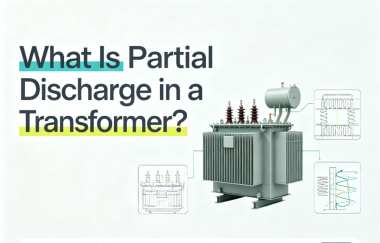
Partial discharge is a relatively common abnormal phenomenon in the insulation system of power transformers and is an important indicator for evaluating transformer insulation condition. Although partial discharge does not usually cause immediate insulation breakdown, prolonged partial discharge can gradually damage solid and liquid insulation, leading to insulation deterioration and, in severe cases, insulation breakdown. Therefore, understanding the causes of partial discharge and applying appropriate detection and corrective measures are essential for ensuring the long-term safe and stable operation of transformers.
Catalog
I. What Is Partial Discharge in a Transformer?
II. Causes of Transformer Partial Discharge
III. Solutions to Transformer Partial Discharge
I. What Is Partial Discharge in a Transformer?
Transformer partial discharge refers to a localized electrical discharge that occurs within a specific area of the transformer insulation system without completely bridging the insulation structure. It can occur inside insulating materials, between insulating materials and conductors, or in small defects within transformer insulating oil.
Partial discharge is commonly associated with air gaps, impurities, cracks, sharp edges, structural defects, and insulation aging. When the electric field strength in a localized area exceeds the withstand capability of the insulation, partial discharge may occur. As repeated discharges continue, they can gradually erode the insulation material, causing the original defect to expand and eventually affecting the overall insulation performance of the transformer.
II. Causes of Transformer Partial Discharge
1. Insulation Aging
After long-term operation, transformer insulation materials such as insulating paper, insulation boards, and insulating oil can gradually deteriorate due to temperature, electric fields, oxidation, and mechanical stress. Aging insulation may develop cracks, delamination, embrittlement, or other defects, which can create small air gaps or weak points and increase the risk of partial discharge.
2. Insulation Structural Defects
During the manufacturing, assembly, or maintenance of a transformer, air bubbles, impurities, metal particles, or other foreign matter may remain inside the insulation system. These defects can cause localized electric-field concentration. In addition, insufficient insulation distance, burrs on insulation components, or improper structural design may create areas of high electric-field intensity and trigger partial discharge.
3. Moisture or Contamination in Insulating Oil
For oil-immersed transformers, insulating oil serves both insulation and heat-dissipation functions. When the oil contains excessive moisture or becomes contaminated by solid particles, aging products, or other impurities, its insulation performance may deteriorate. Under high electric-field conditions, these weak areas are more likely to develop partial discharge.
4. Abnormal Operating Voltage
When a transformer operates for an extended period at a voltage exceeding its designed operating range, the electric-field stress imposed on the insulation system also increases. Grid voltage fluctuations, switching overvoltages, and other abnormal operating conditions may make existing insulation weak points more susceptible to partial discharge.
5. Effects of Temperature and Mechanical Stress
Long-term operation under heavy loads can increase the internal temperature of a transformer. Temperature variations may also cause thermal expansion and contraction of insulation materials. At the same time, electromagnetic forces generated by short-circuit currents can impose mechanical stress on the windings and insulation structure. If the insulation structure becomes displaced, loose, or deformed, new weak points susceptible to partial discharge may develop.
III. Solutions to Transformer Partial Discharge
1. Strengthen Partial Discharge Detection
When partial discharge is suspected, professional testing methods should first be used to determine its location, type, and severity. Common methods include the electrical pulse method, ultrasonic detection, and ultra-high-frequency (UHF) detection. For critical transformers in service, online monitoring systems can also be used to continuously track partial discharge signals and identify changes in insulation condition at an early stage.
2. Inspect and Improve the Insulation System
If partial discharge is associated with insulation aging, cracks, air gaps, or structural defects, targeted corrective measures should be taken based on the test results. Severely aged or damaged insulation components may need to be repaired or replaced. At the same time, the windings, insulation components, and insulation clearances should be inspected to ensure that they meet the required design specifications.
3. Strengthen Transformer Oil Testing and Treatment
For oil-immersed transformers, insulating oil should be regularly tested for moisture content, breakdown voltage, dielectric dissipation factor, and dissolved gases. If the test results indicate significant contamination or severe oil aging, appropriate measures such as filtration, dehydration, purification, or oil replacement should be taken according to the actual condition of the transformer to restore or improve its insulation performance.
4. Control Operating Voltage and Load
Proper control of transformer operating voltage and load can reduce excessive electrical and thermal stress on the insulation system. In applications where grid voltage fluctuations are significant, operating parameters should be closely monitored, and abnormal voltage or overload conditions should be addressed promptly.
5. Perform Regular Maintenance and Preventive Inspection
Regular maintenance is an important measure for reducing the risk of partial discharge. Maintenance should focus on the condition of the insulation system, windings, and connection components. Temperature, load, insulating oil condition, and partial discharge data should also be considered together to evaluate the overall health of the transformer. When abnormal partial discharge signals are detected, further diagnosis should be performed promptly rather than relying solely on routine maintenance to resolve the problem.
IV. Conclusion
Transformer partial discharge is commonly associated with insulation aging, insulation structural defects, moisture or contamination in insulating oil, abnormal operating voltage, and temperature or mechanical stress. Partial discharge may initially indicate only a localized insulation defect, but if left untreated, it can accelerate insulation deterioration and increase the risk of insulation failure.
Therefore, transformer operation and maintenance should combine partial discharge detection, insulation condition assessment, insulating oil testing, operating parameter control, and preventive maintenance. By identifying abnormalities at an early stage, determining their underlying causes, and applying appropriate corrective measures, the risk of insulation failure can be reduced while improving the safety, reliability, and long-term operating performance of transformers.


